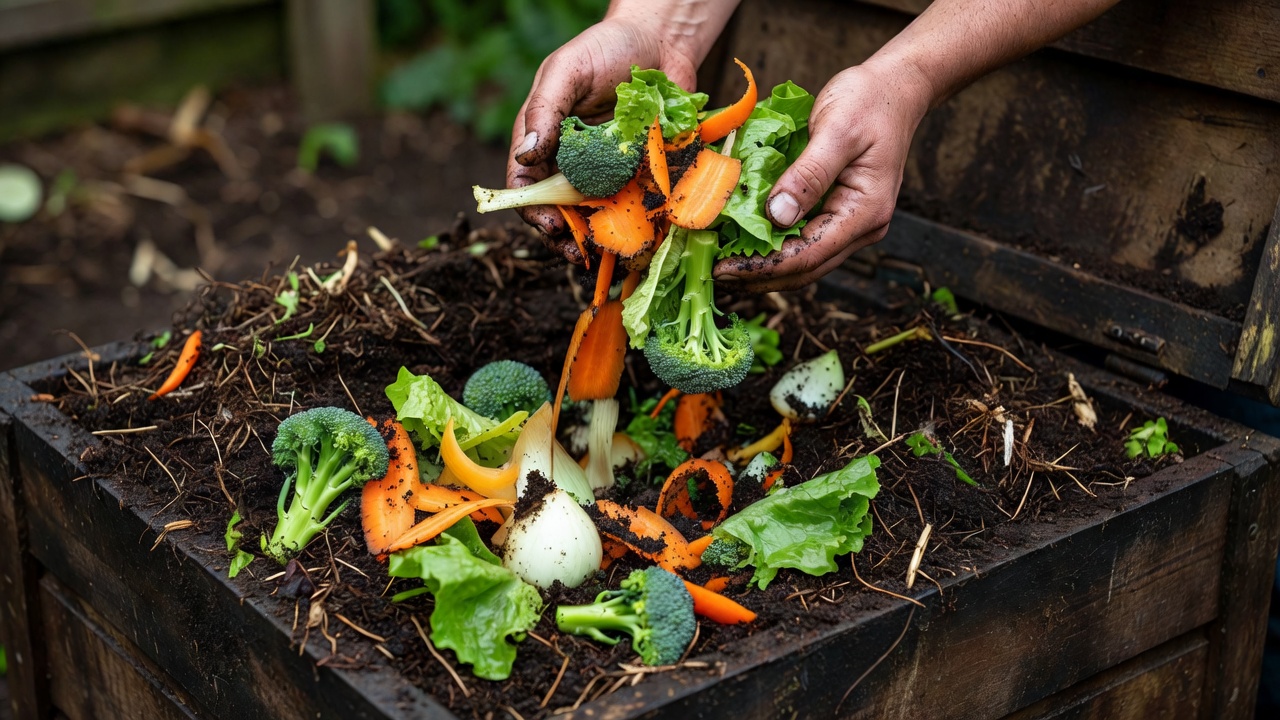
The Science of Decomposition
A successful compost heap relies on millions of microorganisms—bacteria, fungi, and insects—working to break down organic matter. For these organisms to thrive, they require four fundamental elements: carbon, nitrogen, water, and oxygen. When these elements are balanced, the pile will heat up, break down rapidly, and smell like rich earth. When they are out of balance, the decomposition slows dramatically, and the pile may become foul-smelling or slimy.
The Carbon-to-Nitrogen Ratio: Greens vs. Browns
The most critical aspect of managing a compost bin is understanding the balance between nitrogen-rich materials (commonly referred to as "Greens") and carbon-rich materials ("Browns"). A healthy pile should generally aim for a visual ratio of about 2 to 3 parts Browns for every 1 part Greens.
Greens (Nitrogen)
Greens provide moisture and the raw protein needed by microorganisms to rapidly multiply. They break down quickly.
- Fruit and vegetable scraps
- Coffee grounds and tea leaves
- Fresh grass clippings
- Green plant trimmings and weeds (that have not gone to seed)
Browns (Carbon)
Browns provide the structural energy for the microbes and create small air pockets within the pile, which prevents it from compacting and suffocating.
- Dry leaves
- Shredded cardboard and paper (uncoated, no glossy ink)
- Straw and hay
- Small twigs and sawdust
Note: Avoid adding meat, dairy, oils, or pet waste to a standard home compost pile, as these materials attract pests and harbor pathogens that a backyard pile cannot reach high enough temperatures to destroy.
Setting Up Your System
Select a location for your compost bin that is convenient to access year-round, ideally on bare soil (which allows beneficial insects and worms to migrate upward into the pile). The type of bin you choose depends on your available space:
Open Heaps / Pallet Bins: Ideal for large gardens. They offer excellent airflow and are easy to turn with a pitchfork, but they are more exposed to the elements and potential wildlife.
Enclosed Plastic Bins: Common in urban and suburban settings. They retain heat and moisture well and keep pests out, though they require careful attention to aeration since airflow is restricted.
Tumblers: Elevated barrels that can be spun by a handle. They make turning the compost very easy and are completely pest-proof, but they often struggle to reach the high temperatures found in larger ground piles.
Worm Bins (Vermicomposting): For those without outdoor space, an indoor worm bin utilizes specialized worms to break down food scraps into highly potent castings. They require careful moisture and feeding management but can be kept under a kitchen sink.
Aeration and Moisture Management
A compost pile must breathe. If it compacts too tightly, the environment becomes anaerobic (without oxygen), allowing different, odor-producing bacteria to take over. To prevent this, "turn" the pile every few weeks by mixing the contents with a fork, or by ensuring you incorporate plenty of coarse Browns when adding dense layers of Greens.
The moisture level should resemble a "wrung-out sponge." If the pile is too dry, decomposition will stall entirely; add water lightly or introduce more wet Greens. If the pile is too wet, it will turn sludgy and smell foul; mix in dry leaves or shredded cardboard to absorb the excess moisture.
Troubleshooting Common Issues
The pile smells like ammonia: This indicates an excess of nitrogen (too many Greens). Add a significant amount of Browns, like shredded paper or dry leaves, and mix thoroughly.
The pile smells like rotten eggs: This means the pile is anaerobic. It is likely too wet or compacted. Turn the pile to introduce oxygen and add dry structural Browns to open up airflow.
Nothing is happening: The pile is likely too dry, too small to retain heat, or lacks nitrogen. Add water, a bucket of green grass clippings, or coffee grounds, and ensure the pile is at least a cubic meter in size if possible.